My loves,
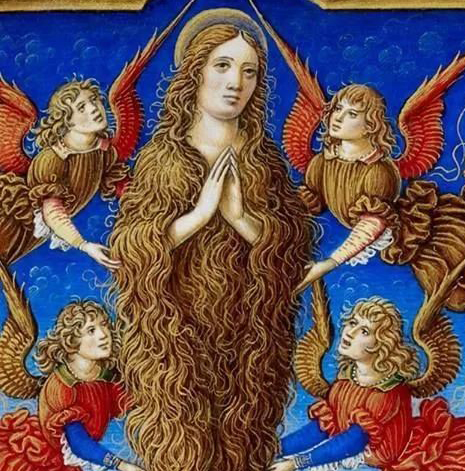
Mary Magdalene has lived inside my imagination for years, though not as the church once described her. I grew up with a version of her story that never sat well in my bones. I sensed a distortion, something bent out of shape by centuries of sermons and fears. She deserved better than the label forced upon her. My instinct whispered this long before I found the historians who proved it.
Once I began reading primary scholarship and not devotional retellings, I realized her name had been handled carelessly. Many Christians still picture her as a reformed sex worker, a woman pulled from a life of shame by Christ. This identity never appears in the Gospels. Not once. Her name enters the story as a disciple whose faith held steady while the men scattered in terror.
The misnaming began in a sermon delivered by Pope Gregory I in the year 591. Gregory fused three separate women into one. A nameless woman who anoints Jesus in Luke 7. Mary of Bethany in John 12. Mary Magdalene in Luke 8. He treated them as one figure, and the error hardened inside Western Christianity for more than a millennium. Scholars have dismantled this conflation many times, yet portions of the world still cling to it because the story feels familiar and convenient. A woman redeemed from sexual sin fits a pattern Christian cultures often reach for when they do not know what to do with female power.
If we go to scripture alone, Mary Magdalene occupies a place of fierce presence. She finances the ministry. She travels with the disciples as an equal. She remains near the cross when Roman cruelty pushes others away. She becomes the first witness of the resurrection in John 20, and many early Christian communities honored her with titles that reflect authority rather than shame. The Gospel of Thomas and the Gospel of Mary, though noncanonical, reveal a tradition where her insight commands attention. Peter pushes back in those texts because she is a woman who speaks with conviction, rather than one who has “fallen.”
Bart D. Ehrman. “Mary Magdalene as a Prostitute.”
Ehrman traces the origin of the prostitute label and makes it clear the Gospels never place Mary Magdalene in that role. He walks through each passage where her name appears and shows how later interpretation, not scripture, created the association. His work helps ground her identity in the earliest sources rather than the legend.
Biblical Archaeology Society. “Was Mary Magdalene Wife of Jesus? Was Mary Magdalene a Prostitute?”
This article examines every canonical reference to Mary Magdalene and documents her presence within the ministry of Jesus. It demonstrates how the sinful woman in Luke is not Mary Magdalene and explains how the mistaken identity developed. The piece offers a clear, text-based separation between her and the unnamed women often merged with her.
Roger Pearse. “A Homily of Gregory the Great and Mary Magdalene.”
Pearse provides access to Pope Gregory I’s sermon and discusses how the pope merged three women into one figure. His commentary shows how the fusion originated and why it endured. The analysis helps trace the exact point where Mary Magdalene’s story shifted in Western tradition.
U.S. Catholic. “Who Framed Mary Magdalene?”
This piece explains how the church’s storytelling, art, and devotional culture reinforced the mistaken identity long after the original error. It offers a historical overview that acknowledges the institutional role in shaping the myth and reflects on how the narrative influenced Christian imagination.
Prince examines the textual and historical differences between Mary Magdalene and Mary of Bethany. Her paper highlights how early commentary, linguistic detail, and later tradition became entangled. She argues for a careful return to the primary texts to restore the distinction and give each woman her own narrative integrity.
Each of these sources confirms what many women sense intuitively. The church did not erase her. The church renamed her. A woman who stood in spiritual authority became a warning tale. A witness became a caution. A leader became a symbol of rescued sin.
For me, reclaiming her story feels like reclaiming pieces of my own. Too many women have been pushed into smaller shapes by communities that cannot imagine female holiness without some undercurrent of repentance. Her name gives us permission to resist that narrative.
Mary Magdalene walked beside Christ with strength and clarity. She carried insight, loyalty, and presence. Her story belongs to anyone who has ever had their truth distorted by another’s convenience. Restoring her name is not an act of correction. It is an act of spiritual integrity.
I return to her often, as a leader who refused to look away from sacred presence. The world tried to rename her; she kept her place.
With love and care,
-A

 Red Thread Letters
Leave a comment